AI Coding
Claude Code Subagents: What You Should Know
Claude Code subagents hand work to separate agent contexts for parallel or isolated tasks. What they are, when they help, and when to skip them.
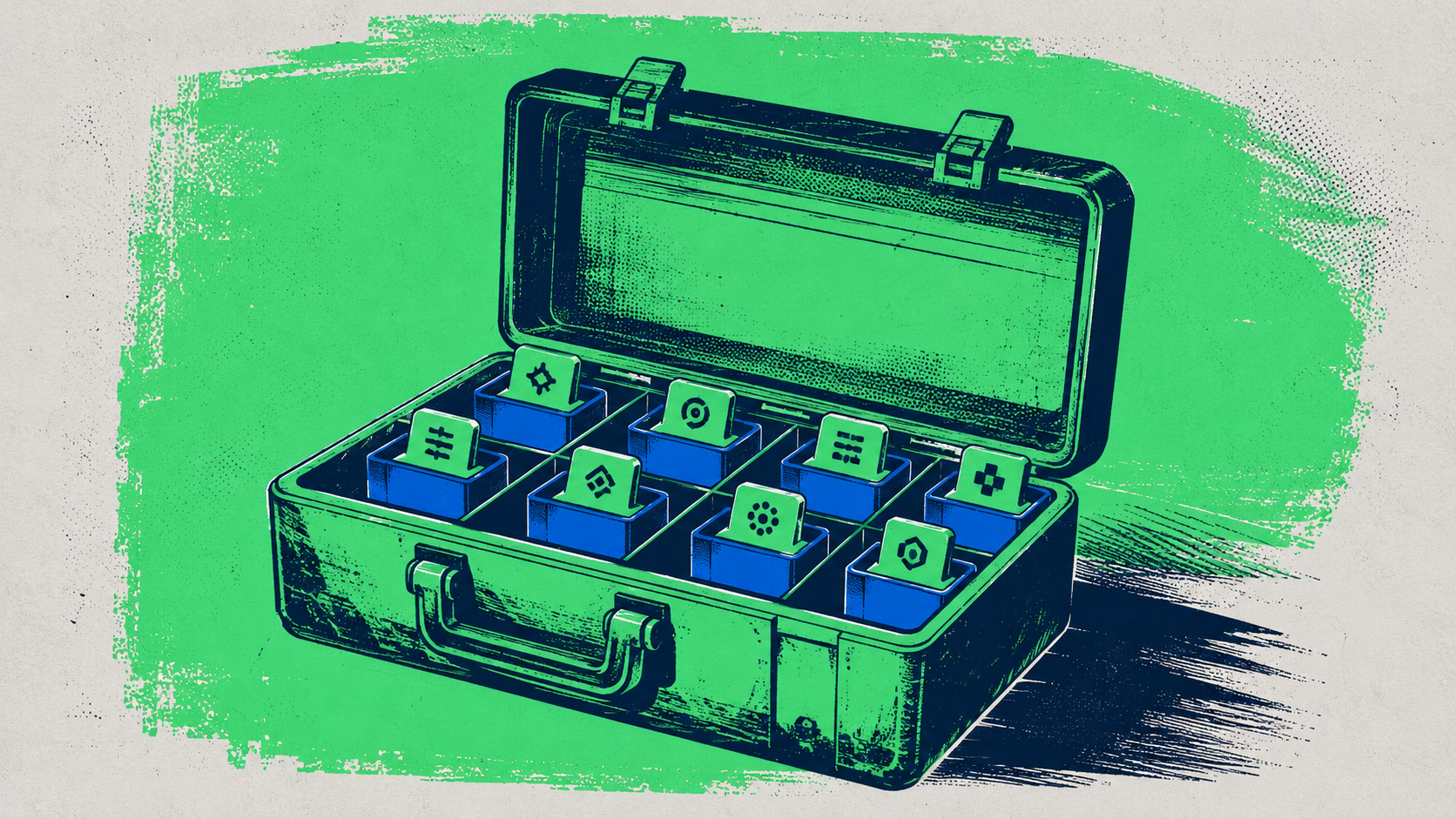
A Claude Code subagent is a separate agent context the main agent can hand a slice of work to. Instead of one agent juggling research, edits, and tests at once, the main agent delegates a focused job to a subagent that works in isolation and reports back. Subagents keep contexts clean and enable parallel work.
This layer is among the newest and fastest-changing parts of the tool. As of May 2026, subagents behave roughly as described, but their configuration, limits, and naming shift between releases. Verify the current behavior against the official Claude Code docs before building a workflow that depends on them.
What is a subagent, in plain terms?
Picture the main agent as the lead on a task. A subagent is a specialist it can spin up for one focused job, hand the relevant context, and then collect the result from, without cluttering its own working memory with all the intermediate detail.
The key property is context isolation. When the main agent reads a hundred files to answer one question, all that detail crowds its context and can make later steps worse. Delegating that research to a subagent means the messy intermediate work happens elsewhere, and only the conclusion comes back. The lead stays focused on the plan; the specialist handles the deep dive.
That isolation is also what enables a degree of parallelism. Independent slices of work can be farmed out to separate subagent contexts rather than handled strictly one after another.
How do subagents differ from skills and plugins?
These layers are easy to confuse because they all extend the agent, but they solve different problems. The cleanest split is instructions versus execution context.
A skill is reusable instructions, “here is how to do this kind of task.” A plugin distributes skills and commands so a team shares them. A subagent is neither of those: it is a separate place for work to happen. You are not teaching the agent a new procedure; you are giving it a fresh, isolated context to run a slice of work in.
Put together: skills shape how the agent works, plugins distribute those shapes, and subagents parallelize and isolate the work itself. We covered the first two layers in Claude Code Skills and Claude Code Plugins; subagents sit above them as the execution-context layer. If you are still getting oriented to the whole system, the Everything Claude Code overview maps how all the pieces connect.
When do subagents actually help?
Subagents earn their keep on work that is either independent enough to parallelize or noisy enough to wall off. If neither applies, a single agent context is simpler and usually better.
Cases where they shine:
- Parallel investigation. Several independent questions about a large codebase, each handled by its own subagent, then summarized.
- Context hygiene. A task that requires reading a lot of files to produce a small answer, keep the noise out of the main thread.
- Specialized roles. One subagent focused on writing tests while another focuses on implementation, each with its own clean context.
- Bounded subtasks within a big job. Breaking a large migration into slices that can be worked on without stepping on each other.
The connecting thread is separation that pays off. If the subtasks genuinely overlap or depend tightly on each other, splitting them into subagents adds coordination cost without buying you anything.
Lab Notes, subagents add coordination, not just capacity. Every delegated slice is a handoff, and handoffs have a cost. Use subagents when isolation or parallelism clearly pays for that cost, not because spinning up more agents feels productive.
When should you skip subagents?
Most tasks do not need them, and reaching for them early is a common mistake. They are the advanced layer for a reason.
Skip subagents when:
- The task is sequential. If each step depends on the last, there is nothing to parallelize, and one context handles it more cleanly.
- You are still learning the tool. Get comfortable with the core agent and a few skills first. Subagents add moving parts that are harder to reason about when the basics are unfamiliar.
- The context is small. If the main agent can hold the whole task without strain, isolation buys you nothing.
- Coordination would dominate. When splitting the work means more time wiring results together than the split saves, do not split.
The same boundary discipline that governs every AI tool decision applies here. Reach for the layer that fits the shape of the work, not the most powerful one available. That framing, name the boundary, then choose the tool, runs through how we think about the whole landscape, including the Claude Code vs Cursor comparison.
How should you start using subagents?
Start by building the habit on real but low-stakes work, the same way you would adopt any advanced feature. Make sure the core agent is set up cleanly first, if you have not, Install Claude Code covers the basics, and that you have run enough single-agent tasks to have a feel for how it reasons.
Then look for the first task that genuinely wants parallelism or isolation. Maybe it is investigating three unrelated parts of a codebase at once, or keeping a noisy research step out of your main thread. Use a subagent there, watch how the delegation and handoff work, and read the result the same way you would read any agent diff, carefully. Expand only when the pattern keeps proving useful.
Because subagents are such a new and shifting layer, the Anthropic documentation is the only reliable reference for current configuration and limits. Verify there before you commit a workflow to them. Tradeoffs first. The tool comes after.
What does delegating to a subagent actually cost?
It is worth being concrete about the costs, because “spin up more agents” sounds like free capacity and is not. Every delegation buys parallelism or isolation at the price of coordination, and that trade only pays off when the work genuinely wants it.
The first cost is the handoff itself. The main agent has to package the relevant context, hand it over, and then make sense of what comes back. For a small task, that packaging-and-merging overhead can exceed whatever the split saved. A subtask has to be substantial enough that the isolation earns its setup.
The second cost is reasoning about a system with more moving parts. A single agent context is easy to follow, you can read one transcript and one diff. Once work is fanned out across several subagents, you are reviewing several streams and trusting that their results compose correctly. That is harder to verify, and verification is the whole game with agentic tools. More parallelism means more surface area to check.
The third, subtler cost is the temptation to over-architect. Once subagents are available, there is a pull toward designing elaborate multi-agent pipelines for problems a single context would have handled fine. That is the same anti-pattern as adding ceremony before solving a problem. The discipline is to reach for a subagent only when you can name the specific isolation or parallelism you need, and to default to the simpler single-context approach when you cannot. Capacity you do not need is just complexity you have to maintain.
Related reading
- Everything Claude Code: What You Should Know, how subagents fit the whole system.
- Claude Code Skills and Claude Code Plugins, the instruction and distribution layers.
- Claude Code vs Cursor: Choosing Your AI Coding Tool, choosing the agent surface your workflow fits.
Sources
- “Claude Code documentation”, Anthropic, official documentation on subagents, delegation, and agent configuration.
- “Claude Code”, Anthropic, official product overview.