Persistence
ObjectSerializer Legacy Alternatives for Android Apps
How to understand the old ObjectSerializer pattern and choose safer modern options for app data.
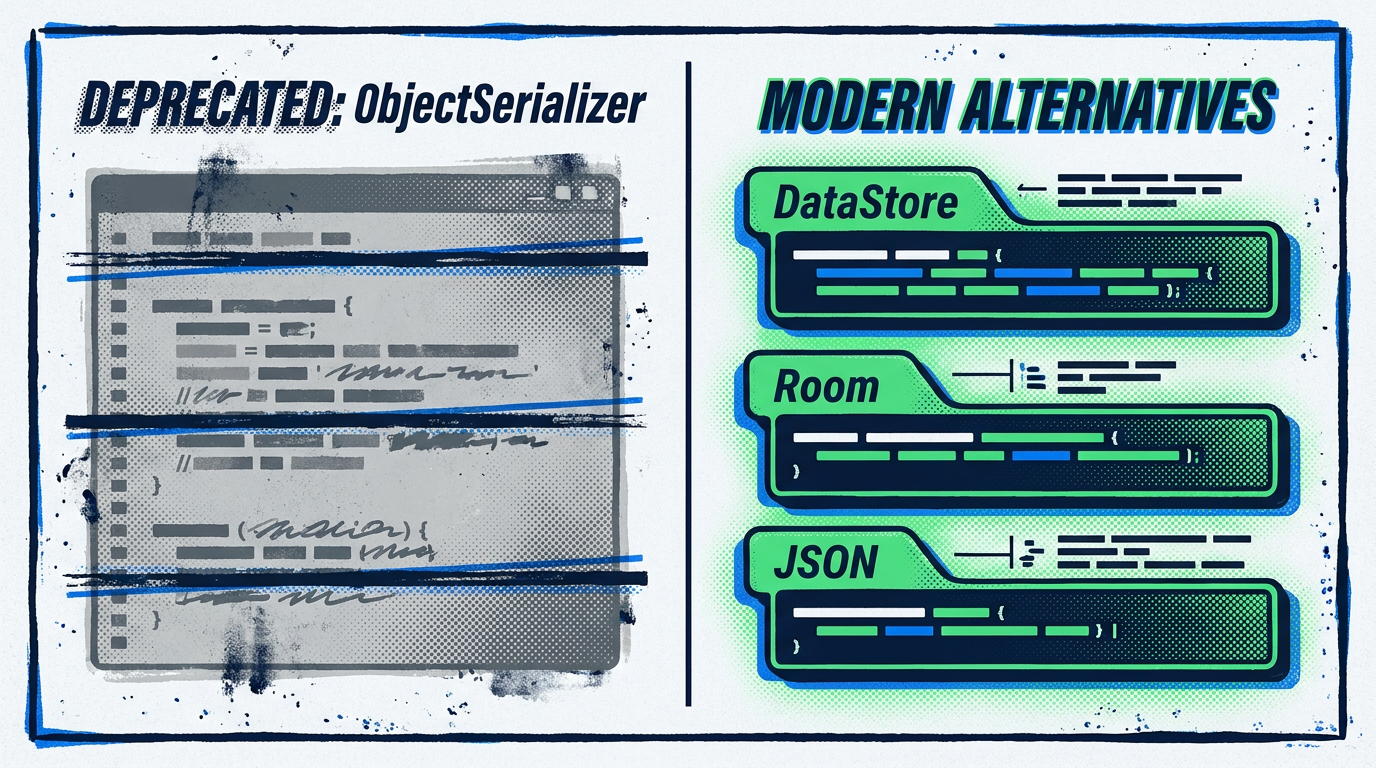
The original Android Dev Course domain became associated with an ObjectSerializer.html utility pattern. That history is worth preserving, but modern Android apps should be careful about copying old serialization code directly into production.
The old pattern was understandable for its time: take an object, turn it into a string, store the string, and load it later. It helped beginners see persistence as a concrete process. The risk is that a convenience helper can hide versioning problems, unsafe assumptions, and data that really belongs in a structured store.
When a Simple Serializer Is Acceptable
A small serializer can still be useful for examples, throwaway demos, import/export flows, or values that are not critical to app integrity. Keep the object shape simple, handle errors explicitly, and assume stored data may be missing or outdated.
Do not use a legacy serializer for sensitive data, authentication state, complex relational data, or anything that needs reliable migrations.
Prefer DataStore for Small App State
Jetpack DataStore is a better fit for small preference-style values such as onboarding flags, selected theme, or lightweight settings. It gives a modern API surface and avoids some of the weaknesses that made older storage helpers hard to maintain.
Prefer Room for Structured Data
Room is the better choice when records need queries, relationships, or migrations. If the app has lists of entities, history, offline data, or anything you need to inspect and evolve, a database model is usually clearer than serialized blobs.
Keep the Lesson, Update the Practice
The lasting lesson from ObjectSerializer is not that every app should serialize objects into strings. The lesson is that data needs a deliberate home. Modern Android development gives you better homes for different kinds of data. Choose the smallest tool that stays honest about failure, migration, and long-term maintenance.
Related reading
Sources
- “DataStore”, Android Developers, Official replacement guidance for legacy persistence